Facebook Lead Ads vs WhatsApp Ads: Which Gives Cheaper Leads?
Facebook lead ads vs WhatsApp ads: cost per lead vs cost per qualified lead vs cost per sale, why a cheap lead can cost more, when each wins and how to test.
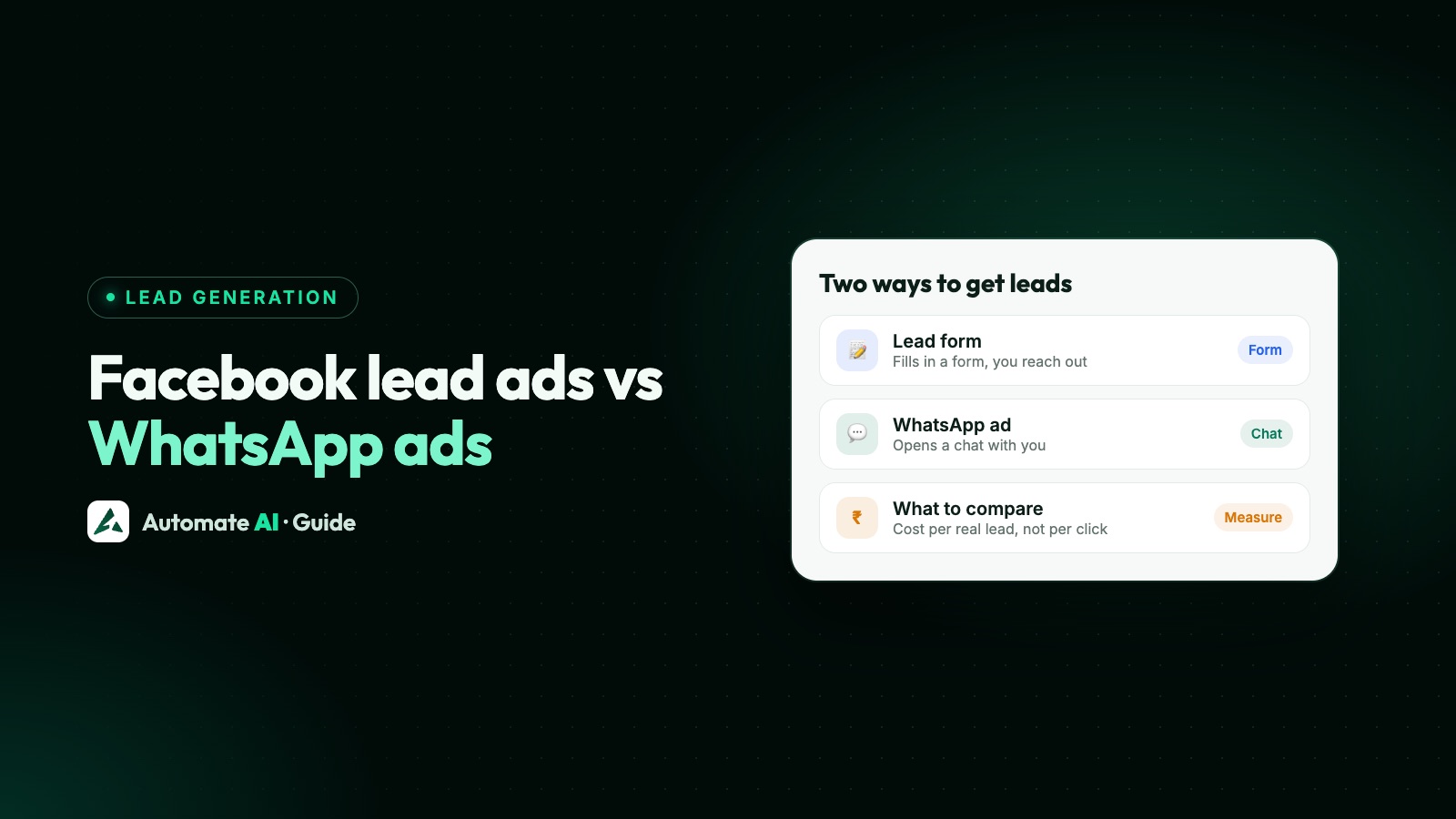
Neither is always cheaper. Facebook lead ads can show a lower cost per lead, because a pre-filled form takes less effort than starting a chat, but the cheapest lead isn’t always the cheapest customer. WhatsApp ads, meaning Click-to-WhatsApp ads, can cost more per lead on the dashboard and still win once you count who answers, who qualifies and who buys. Or they might not.
Both are sold in Meta’s auction, so neither has a fixed price per lead, and your results will depend on your offer, audience and follow-up. This guide explains the three costs to compare, why a cheap lead can cost more in the end, when each ad type wins and how to run a fair test.
Key takeaways
- There’s no fixed price per lead on either: both run in Meta’s ad auction.
- Compare three numbers: cost per lead, cost per qualified lead and cost per sale.
- A cheap form lead gets dearer once you count people you can’t reach, template charges and sales time.
- WhatsApp ads can have free messages for up to 7 days if you reply within 24 hours; lead ads don’t.
- Lead ads suit teams who contact every lead fast; WhatsApp ads suit products people want to ask about.
- Decide on cost per sale from a fair test, not on the number at the top of the dashboard.
The two ad types in brief
| Facebook lead ads | WhatsApp ads (Click-to-WhatsApp) | |
|---|---|---|
| Where they run | Facebook and Instagram | Facebook and Instagram |
| What the person does | Submits a short form, using details they’ve already shared with Facebook | Taps, then sends a message that’s already typed |
| What counts as a lead | A form submission | A chat started |
| Who writes first | You do | They do |
| How you pay for the ad | Meta’s auction | Meta’s auction |
The word “lead” hides a real difference. A form lead has given you details but hasn’t talked to you. A chat lead has talked to you but may have told you very little. Comparing them on cost per lead alone compares two different things.
Three costs, and what each tells you
| Measure | The sum | What it tells you | Where it misleads |
|---|---|---|---|
| Cost per lead | Total cost ÷ leads | How cheaply the ad gets a response | It counts people who’ll never answer |
| Cost per qualified lead | Total cost ÷ leads who pass your test | How cheaply you reach real prospects | It only works if every lead faces the same test |
| Cost per sale | Total cost ÷ sales | What a customer really costs | It’s slow to show up when sales take weeks |
Total cost means ad spend plus WhatsApp message charges and, if you can estimate it, your team’s time. Your test is one line written before the ads run, such as: in our area, has a budget, wants to buy within 30 days and answers when contacted.
Compare cost per sale with what a sale is worth to you. That’s the only “good” number that means anything, because a figure that’s cheap for a property developer would be ruinous for a shop selling T-shirts.
Why a cheap lead can cost more in the end
- People who don’t expect you. A form takes seconds, so by the time you make contact, some won’t remember it.
- Numbers that go nowhere. The form uses details people once shared with Facebook, and a saved number may be old or not on WhatsApp.
- You pay to start the conversation. Each template you send is charged when it’s delivered, whether or not they reply.
- Sales time. Twice as many leads means about twice the calling, whether or not sales rise with it.
- Quality. Messaging people who don’t remember you invites negative feedback, which can lower your template’s quality rating.
Chat leads have their own waste: people who press send out of curiosity, and chats that sit unanswered. Here’s how the sums can play out. These numbers are made up to show the working. They are not a benchmark, and they could be in any currency.
| Made-up example | Lead ads | WhatsApp ads |
|---|---|---|
| Ad spend | 10,000 | 10,000 |
| Follow-up messages | 200 | 0 |
| Leads | 400 | 200 |
| Cost per lead | 25.50 | 50 |
| Qualified leads | 40 | 50 |
| Cost per qualified lead | 255 | 200 |
| Sales | 6 | 7 |
| Cost per sale | 1,700 | 1,429 |
Lead ads win the first line and lose the last. Now change one made-up number. Suppose the team calls every form lead within minutes, 70 qualify and 11 buy. Lead ads then cost 146 per qualified lead and 927 per sale, and they win easily. The ad type didn’t change. The follow-up did.
What you pay after the ad
| After the ad | Lead ads | WhatsApp ads |
|---|---|---|
| First WhatsApp message | An approved template, charged when delivered | Free if you reply within the 24-hour window |
| Messages in the next few days | Normal charges | Free for up to 7 days after that reply |
| When they reply | A 24-hour customer service window opens | The same window applies |
| Permission | Say on the form that your named business will contact them on WhatsApp | You can reply to their chat; ask before you send marketing later |
The free window applies when someone messages you from the ad on WhatsApp’s Android or iOS app, and Meta Business Agent messages are still charged. Normal charges depend on the template category and the recipient’s country: see WhatsApp API pricing by country.
As an example, Meta’s list rates for Indian numbers are ₹0.8631 per marketing template and ₹0.1150 per utility template, before 18% GST and your provider’s fees. At rates like these, message charges are often small next to ad spend, so don’t let them decide the question alone.
When Facebook lead ads win
- You need details up front, such as a postcode, a service type or a budget, which custom questions can collect.
- Your team contacts every lead quickly, ideally within minutes.
- People aren’t ready to chat, or the purchase is one they’d rather think about first.
- Your customers don’t use WhatsApp much. In the US, WhatsApp also doesn’t currently deliver marketing templates, so plan on phone or email follow-up.
- You have the volume for Conversion Leads. This Meta goal uses your sales results to look for leads more likely to convert. Meta’s guide asks for at least 200 leads a month.
If form leads are cheap but weak, try a higher-intent form, which adds a step to review and confirm answers, or Meta’s phone verification, before you give up on them.
When WhatsApp ads win
- People want to ask before they buy, as they often do with clinics, courses, property and local services.
- You can reply in minutes, with a chatbot, AI or a team on hand.
- Your form leads don’t pick up. A chat they started themselves doesn’t need a cold call.
- Your customers already live on WhatsApp, and it’s where they’d choose to talk to you.
- You follow up over a few days. The free window can cover that follow-up, including templates.
If chats are cheap but weak, the fix is usually in the ad and the first message. See how to get quality leads from WhatsApp ads.
How to run a fair test
- Write down your test for a qualified lead, and who decides whether a lead passes it.
- Use the same offer, creative, audience and budget for both ads, and change only where the tap leads.
- Use Meta’s A/B testing if it can compare your set-up. It splits people into groups that don’t overlap, and Meta warns that two campaigns running side by side don’t give a true result. Otherwise, run one after the other in similar weeks and treat the result as a rough guide.
- Treat both sets of leads alike: the same people, working hours and speed of reply.
- Count every cost, including template charges and an estimate of sales time.
- Follow leads through to the sale. Stop the clock only when enough sales have closed to compare, so a test for a slow sale needs a longer window.
- Decide on cost per sale. If too few sales have come in, use cost per qualified lead for now and check again later.
Using both, with one follow-up
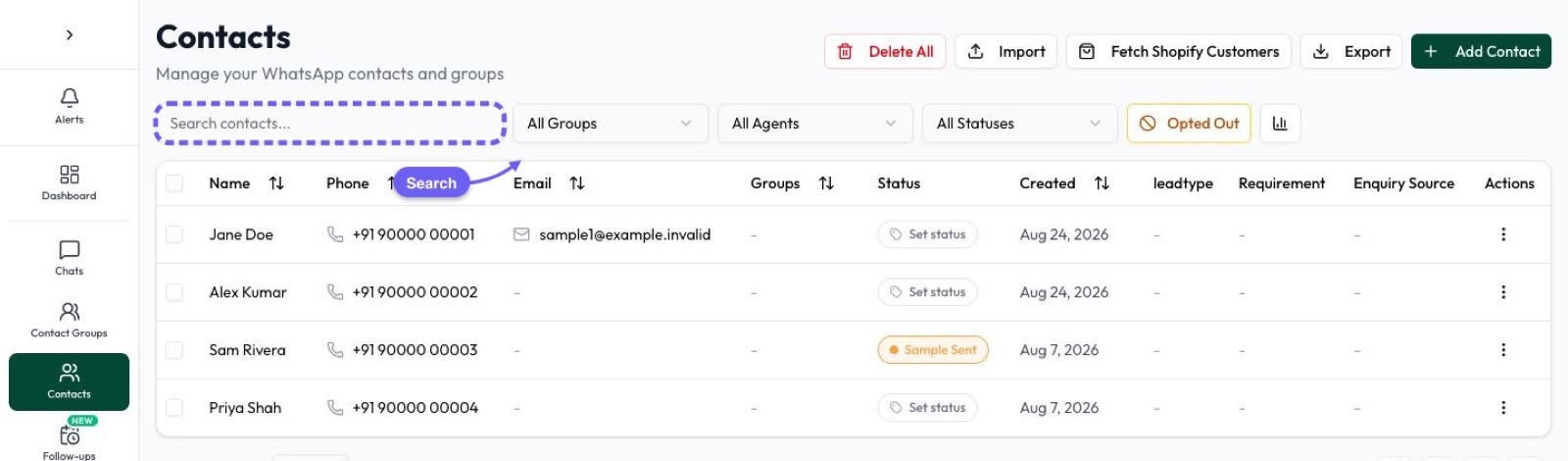
You don’t have to pick a side. Many businesses run both, and the two can share one follow-up process in WhatsApp.
- Lead ads: the Facebook Lead Ads integration, in Series 2, 3 and 4 of Automate AI, saves each lead as a contact and can send an approved template straight away. The steps are in how to send lead ads to WhatsApp.
- WhatsApp ads: create them under Campaigns › Meta Ads on every plan, and see spend, chats and new contacts per ad. More in Click-to-WhatsApp Ads.
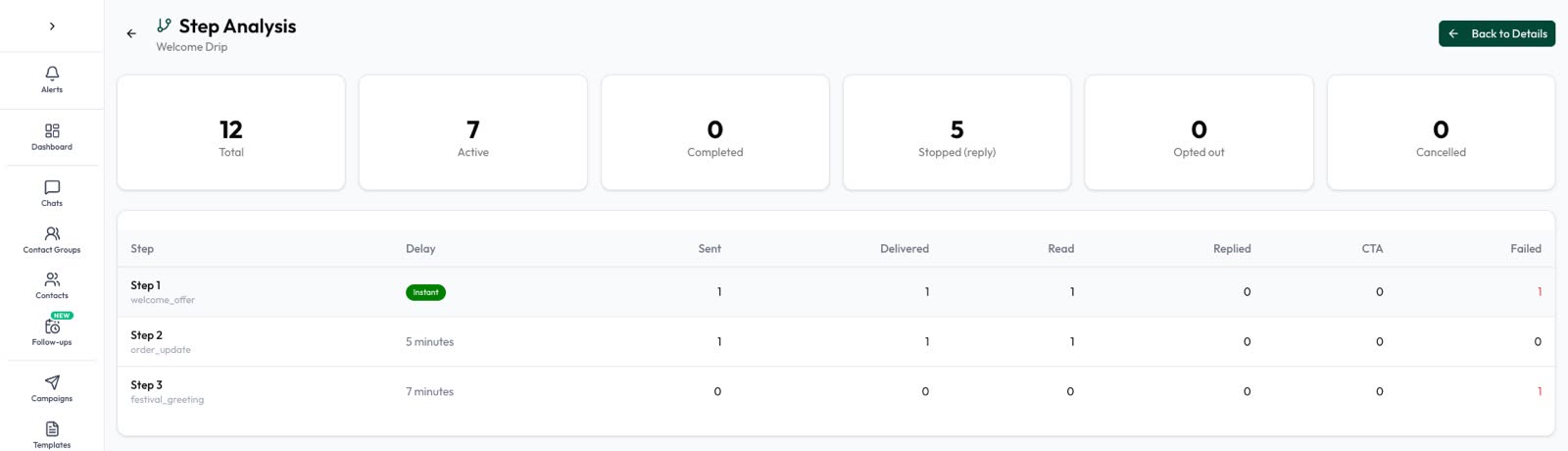
- Follow-up: a drip sequence can reach people who go quiet and stop when they reply, with results for each step.
Thinking about a landing page as well? Read Click-to-WhatsApp ads vs website vs lead forms.
Frequently asked questions
Are Facebook lead ads cheaper than WhatsApp ads?
They can be per lead, because a form takes less effort than starting a chat, but there’s no fixed price and it isn’t always so. Compare cost per qualified lead and cost per sale with your own numbers.
What is cost per qualified lead?
Your total cost divided by the number of leads who pass a test you set in advance, such as being in your area with a real budget and answering when contacted.
Why are my Facebook leads cheap but bad?
Forms are quick to submit, so some people aren’t serious or forget doing it. Try a custom question, a higher-intent form, phone verification and a faster first message.
Do Facebook lead ads get the free WhatsApp window?
No. The free entry point window is for people who message you from an ad that clicks to WhatsApp. A template you send to a form lead is charged normally.
Can I send Facebook leads to WhatsApp automatically?
Yes, with a tool connected to your Page. Each lead can get an approved template, as long as your form says you’ll contact them on WhatsApp.
How much should I spend on a test?
There’s no set amount. You need enough for both ads to reach real sales or a clear count of qualified leads. Meta also notes that A/B tests need an adequate budget.
Sources
- Meta for Business: Lead ads
- Meta Marketing API: Lead ads
- Meta Marketing API: Create lead ads (higher-intent forms)
- Meta: Conversion Leads integration
- Meta: Pricing on the WhatsApp Business Platform (free entry point window)
- Meta for Business: A/B testing
- Meta: Template quality
- Meta: Get opt-in for WhatsApp
WhatsApp rules and prices change. We check these guides against Meta’s documentation, but always confirm current terms with Meta before you rely on them. Questions? Message us on WhatsApp at +91 836 977 8812.